
HP Blade Servers


the Maghreb.

full warranty
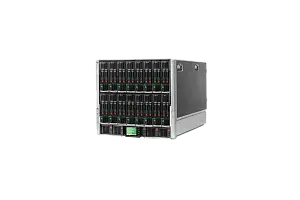
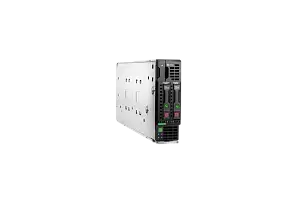
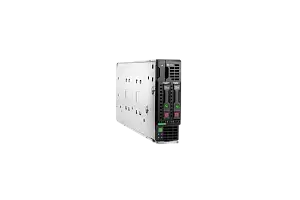
Any server or storage you can configure according to your demands in our configurator or by consulting with an expert. Our expertise helps us set new quality standards
to buy a servers at IDC
Ask to consultant
Repair and/or replacement of components.
More about warranty
part
warranty
part
warranty
Testing
We’re committed to full reliability: every unit, new or refurbished, receives thorough diagnostics, testing, and parts replacement
maximum load
Systems are stress-tested with varied software stacks to prove stability—so you can rely on them for years to come
Power supply
We push components to the limit for several days, and if something’s uncertain, we change it
of all equipment
New or used, every device is tested to the same standard. In addition, we include our own warranty with the manufacturer’s
HPE BladeSystem blade servers
In comparison with classic servers, HPE BladeSystem blade servers are more compact, easily transportable, quickly deployable and replaceable. High density, number of cores per 1U, operation ease and energy efficiency improve business indicators. These advantages also reduce operational costs by 35% and make modular servers a great solution for data centers and companies with limited IT infrastructure space.
If you need classic servers for other business tasks, IDC can offer models for any operational loads.
Generations of HPE BladeSystem servers
Current gen blade servers (such as HPE Synergy 480 Gen10 Plus) are perfect for the most demanding applications. However, their cost is high and efficiency is excessive for small and medium scale businesses. If you are limited with your budget, IDC can offer past gen servers: Gen9 and Gen10. They will meet your requirements if your budget is limited.
Form factors, lines and series of HELP BladeSystem blade servers
HPE BladeSystem series includes several models and lines of ProLiant blade servers.
HPE modular systems consist of two components:
-
HPE BladeSystem chassis — blade housing,
-
HPE ProLiant blades — modular servers,
-
HPE BladeSystem chassis types:
-
HPE BladeSystem C7000 is a large 10U Rack chassis for up to 16 large (full-sized) and up to 8 small (half-sized) blades. The system is supplied with 6 hot-swappable and redundant power supply units. It has no built-in disk subsystem, so the drives are installed in blades or external data storage.
-
HPE BladeSystem C3000 is a 6U Rack chassis for up to 4 full-sized blades, up to 8 half-sized blades and 6 hot-swappable and redundant power supply units. It has no built-in disk subsystem, so the drives are installed in blades or external data storage. The Tower version can be installed vertically (without a rack) on wheels.
HPE ProLiant blade server types:
HPE blade compatible line has the “BL” (Blade) marking. Example is HPE ProLiant BL460c Gen9. Form factors: half-sized and full-sized (single-wide, double-wide, quad-wide). They can be combined: for example, 2 full-sized and 4 half-sized in one HPE C3000.
How to choose an HPE blade server
Firstly, keep in mind that blade servers operate independently, not as a single complex. To build a convergent system, blades must be combined in clusters, just like other servers.
Always remember the golden rule of a stable system: take the operating capacity of a blade server and add at least 30% of its computational potential. The reserve ensures that your server doesn't operate at 100% load and doesn't fail when the load increases. Also, it provides for planned upgrades if you get additional users, applications and loads.
Secondly, modular systems are not the most cost-effective solution when you need one or two servers, because the price of a chassis is rather large. If you need only one server, you should consider classic models that fulfill hardware potential.
Thirdly, blades are good for loads without large capacity drives. Just have a look at characteristics in the corresponding QuickSpecs file. Blades are compact and simply can't fit dozens of drives, meaning that demanding applications require external data storage.